
"Yun’an County"
70 article(s) found
Planting conditions of coffee trees in Yunnan where can I plant coffee trees in China? is Yunnan coffee good?
The basis of coffee planting technology-where coffee trees can be planted in China, such as sunlight, rainfall, soil, altitude, temperature, as well as the way coffee beans are harvested and the production process, will affect the quality of coffee itself. Under the premise of ensuring a temperature of about 20 degrees, the higher the altitude or the closest to the Tropic of Cancer, the stronger the unique flavor of coffee. Very different kinds of coffee. Coffee trees are mainly
The main characteristics of Yunnan coffee beans introduction to the flavor and taste of varieties grown in Yunnan small-grain coffee beans producing areas
Professional coffee knowledge exchange more coffee bean information please follow the coffee workshop (Wechat official account cafe_style) front street-Yunnan coffee characteristics introduce coffee is a very special drink, coffee is a product of the tropics, the growth conditions are very harsh. We all know Colombia, Costa Rica, India.

Flavor and taste characteristics of Yunnan small grain coffee variety Katim introduction to the ranking of Yunnan coffee bean producing area
Professional coffee knowledge exchange more coffee bean information please follow the coffee workshop (Wechat official account cafe_style) Yunnan coffee is an Arabica species, commonly known as Yunnan small grain coffee. The excellent geographical and climatic conditions in Yunnan provide good conditions for the growth of coffee. At present, Lincang, Baoshan and Dehong have been formed.
The difference of story flavor and taste between Yunnan coffee iron card and Katim small grain coffee bean varieties
Typica and Bourbon, two classic high-quality coffee varieties, are the main coffee varieties in Yunnan. In 1991, a series of Catimor varieties were introduced from Kenya (stronger anti-virus ability and higher yield). A variety of Arabian species (also known as small seed species). Because the morphology and habits of the two varieties are similar, the two varieties are mostly mixed. Yunnan area

History of introduction and expansion of Coffee in China in the early stage of Coffee Development (5)
1. From the first peak period of the development of China's coffee industry (1952-1961) to the late 1940s, according to recorded figures, there are 2173.33 hectares of rubber plantations in Hainan Island, with a total of 867600 rubber trees, with an annual output of 199,000 tons of dry rubber, and more than 300,000 coffee plants. the annual output of coffee beans is 1 ton. According to a survey in the early 1950s, there was a large amount of coffee left in Fushan area of Chengmai County, with a total of 70,000.

Coffee planting History of Coffee introduction and expansion in China in the early stage (5)
1. From the first peak period of the development of China's coffee industry (1952-1961) to the late 1940s, according to recorded figures, there are 2173.33 hectares of rubber plantations in Hainan Island, with a total of 867600 rubber trees, with an annual output of 199,000 tons of dry rubber, and more than 300,000 coffee plants. the annual output of coffee beans is 1 ton. According to a survey in the early 1950s, there was a large amount of coffee left in Fushan area of Chengmai County, with a total of 70,000.
The History of Coffee introduction and expansion in China in the early stage (5)
1. From the first peak period of the development of China's coffee industry (1952-1961) to the late 1940s, according to recorded figures, there are 2173.33 hectares of rubber plantations in Hainan Island, with a total of 867600 rubber trees, with an annual output of 199,000 tons of dry rubber, and more than 300,000 coffee plants. the annual output of coffee beans is 1 ton. According to a survey in the early 1950s, there was a large amount of coffee left in Fushan area of Chengmai County, with a total of 70,000.
Qianjie Yunnan Coffee planting Story Yunnan small Coffee Bean Variety Katim Coffee Bean flavor
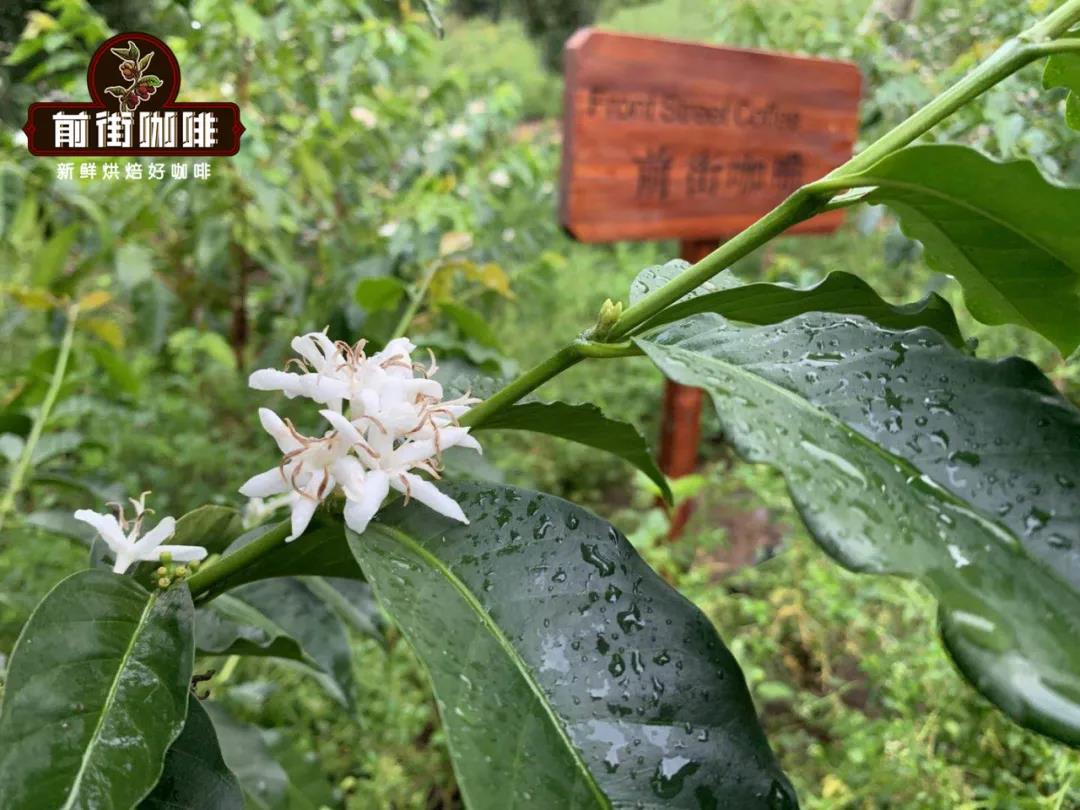
The skin of ripe fruit is red. Because its shape and color are similar to cherries, ripe coffee fruit is called coffecherry in many places. Under the bright red pericarp, the peel, pulp and a sweet sticky yellow substance wrap the coffee beans. Normally, there are two grains of coffee per fruit.

History of introduction and expansion of Coffee in early China (5)
1. From the first peak period of the development of China's coffee industry (1952-1961) to the late 1940s, according to recorded figures, there are 2173.33 hectares of rubber plantations in Hainan Island, with a total of 867600 rubber trees, with an annual output of 199,000 tons of dry rubber, and more than 300,000 coffee plants. the annual output of coffee beans is 1 ton. According to a survey in the early 1950s, there was a large amount of coffee left in Fushan area of Chengmai County, with a total of 70,000.
Research on Kunming to build the largest Coffee Science and Technology Industry Park in the World
It is imperative to build the world's largest coffee technology industrial park in Kunming, and the time is ripe.